
Fox den detection with trained scent dogs.
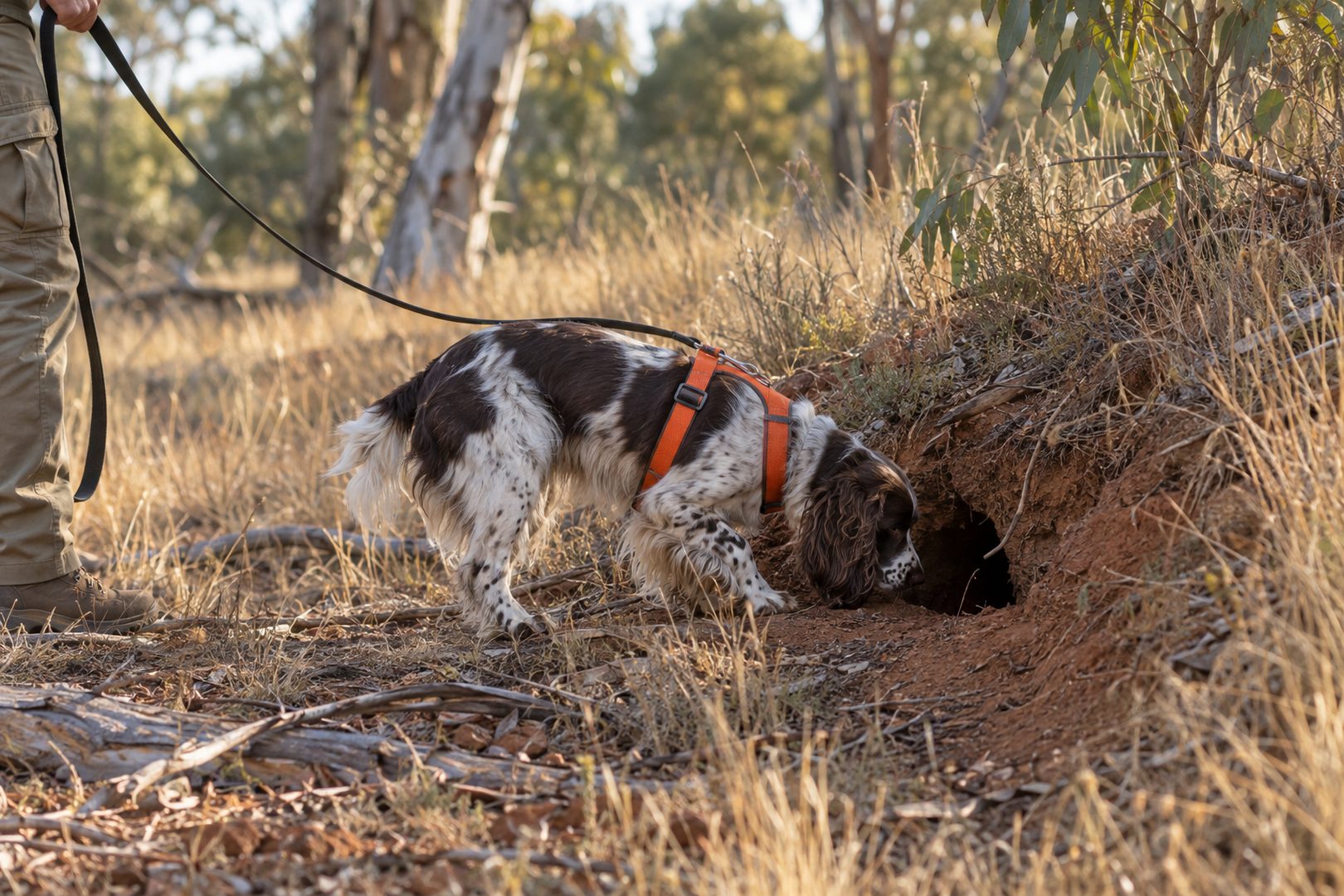
Fox dens are easy to miss in long grass, rabbit warrens, logs, culverts and stockpiles. Our detection dog teams search the ground systematically and indicate active dens by scent, so control can be targeted where foxes are actually breeding rather than where they might be.
A dog's nose covers ground people cannot.
Each search is planned around the site, the season and any approval conditions, and every den the dog indicates is checked and recorded by the handler.
- Handler and detection dog teams trained to find fox dens by scent
- Systematic searches of paddocks, bushland, corridors and rehabilitation areas
- Den searches ahead of clearing, earthworks and stockpile removal
- Follow-up den control and repeat searches to confirm dens are inactive
Every den mapped and recorded.
You receive a clear record of where the team searched, what was found and what happened to each den.
- GPS location, photograph and description of each den
- Den status, such as active, recently used or inactive
- Search tracks and area covered by the dog team
- Control actions taken and recommendations for follow-up
How pricing works
Quotes are itemised by crew day rate, vehicle and equipment, consumables, travel and reporting. Dog team days, search area and follow-up visits are listed separately.
Send the site location, the area or fleet involved, your preferred dates and any approval conditions. We confirm scope, availability and price before work is booked.
Timing the search
Foxes use dens most heavily while raising cubs, which in most of Australia runs from late winter through spring. Searching in this window finds the greatest number of active dens and gives control the biggest impact before young foxes disperse.
Searches can also be run at any time of year ahead of clearing or earthworks, so dens in embankments, stockpiles and warrens are found before machinery reaches them.
Dog welfare and site safety
Our dogs work on lead or under close handler control, are rested between search blocks and are kept clear of baits, traps and chemicals. Searches are planned around your site rules, other stock and any baiting already under way nearby.
Licences and accreditation
Each task is carried out by personnel holding the licence or accreditation it requires in that state, such as chemical application accreditation, a commercial pest management licence or a firearms licence. Copies are supplied with the quote or before mobilisation on request.
Frequently asked questions
Why use a detection dog instead of searching on foot?
A trained dog can pick up fox scent at a den entrance that a person would walk straight past, especially in dense cover or warren systems. That means more dens found in less time and fewer missed breeding sites.
Will the dog disturb native wildlife?
The dogs are trained to target fox scent and work under close handler control. Where threatened species are present we plan the search route and timing with your environmental team.
What happens once a den is found?
Each den is mapped and photographed. Depending on your program and state requirements, it can be treated by licensed personnel on the day or scheduled for follow-up control, then checked again to confirm it is no longer in use.
Can you work alongside an existing baiting program?
Yes. Den searches complement baiting and trapping by finding breeding sites directly. We coordinate timing so dogs are never worked through an area with active baits.